Understanding Google Cloud Services: A Comprehensive Guide
March 25, 2025
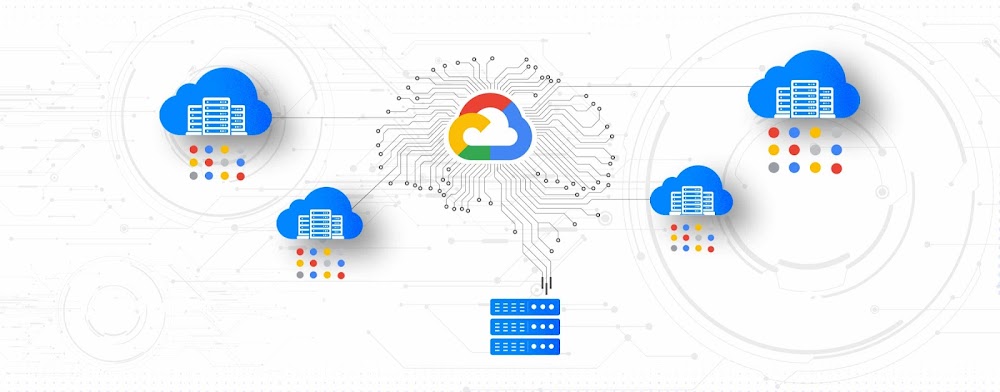
Google Cloud Services is a suite of cloud computing solutions offered by Google that provides businesses and developers with a range of tools to store, process, and analyze data. As one of the leading cloud providers, Google Cloud competes with other major platforms like Amazon Web Services (AWS) and Microsoft Azure. This article explores the key features, services, and benefits of Google Cloud Services.
Key Features of Google Cloud Services
- Scalability & Flexibility – Enables businesses to scale applications seamlessly based on demand, ensuring cost efficiency and performance optimization.
- Security & Compliance – Implements industry-leading security measures, encryption, and compliance with regulations such as GDPR and HIPAA.
- Global Infrastructure – Operates in multiple regions worldwide, ensuring high availability and low latency.
- AI & Machine Learning – Provides AI-driven tools such as TensorFlow, Vertex AI, and AutoML for data analysis and predictive modeling.
- Hybrid & Multi-Cloud Support – Integrates with other cloud providers using Anthos, offering deployment flexibility.
Major Google Cloud Services
1. Compute Services
- Google Compute Engine (GCE) – Provides virtual machines (VMs) for running applications.
- Google Kubernetes Engine (GKE) – A managed Kubernetes service for containerized applications.
- Cloud Run – A fully managed platform for deploying containerized applications.
2. Storage & Database Services
- Cloud Storage – Object storage for unstructured data.
- Cloud SQL – Managed relational databases supporting MySQL, PostgreSQL, and SQL Server.
- BigQuery – A powerful data warehouse solution for big data analytics.
- Firestore – A NoSQL document database for serverless applications.
3. Networking Services
- Cloud Load Balancing – Efficient traffic distribution across servers.
- Cloud CDN – Content delivery network for improved website performance.
- Virtual Private Cloud (VPC) – Secure and scalable networking for cloud resources.
4. AI & Machine Learning
- Vertex AI – A unified AI platform for developing and deploying ML models.
- Cloud Vision API – Enables image recognition and analysis.
- Cloud Natural Language API – Processes and understands human language.
5. Developer Tools & DevOps
- Cloud Build – Automates software development and deployment.
- Cloud Functions – Serverless computing for event-driven applications.
- Cloud Source Repositories – Private Git repositories for collaborative development.
Benefits of Google Cloud Services
- Cost Efficiency – Pay-as-you-go pricing with sustained usage discounts.
- High Performance – Low latency and high-speed data processing via Google’s global network.
- Reliability & Uptime – 99.99% uptime service level agreement (SLA).
- Ease of Integration – Seamlessly integrates with open-source tools and other cloud providers.
- Strong Security Measures – End-to-end encryption and identity management for enhanced security.